
Mold Removal in Toronto
Toronto's humid summers, aging building stock, and combined sewer system create ideal conditions for mold growth. Our IICRC-certified team provides professional mold removal across all Toronto neighborhoods, free inspection included.
Why Toronto Homes Are Prone to Mold
Toronto's climate and built environment create a near-perfect storm for mold growth. Humid summers regularly push outdoor humidity above 70%, and that moisture finds its way into poorly ventilated building envelopes, particularly in older housing stock where vapour barriers either don't exist or have long since failed.
The city's housing inventory spans well over a century of construction. Victorian and Edwardian homes in neighbourhoods like Cabbagetown and The Annex, postwar bungalows across East York and Etobicoke, and mid-century apartment buildings all share a common vulnerability: construction practices of their era didn't anticipate the moisture loads modern occupants generate or the consequences of decades of deferred maintenance.
One of the most common and least-understood contributors to attic mold in Toronto is improper bathroom exhaust venting. For decades, building codes either didn't require ducted exhaust fans or inspections simply didn't catch improperly installed ones. Countless Toronto homes have bathroom exhausts that terminate in the attic rather than outside, pumping warm, humid air into an unconditioned space year-round and creating ideal conditions for mold on roof sheathing and rafters.
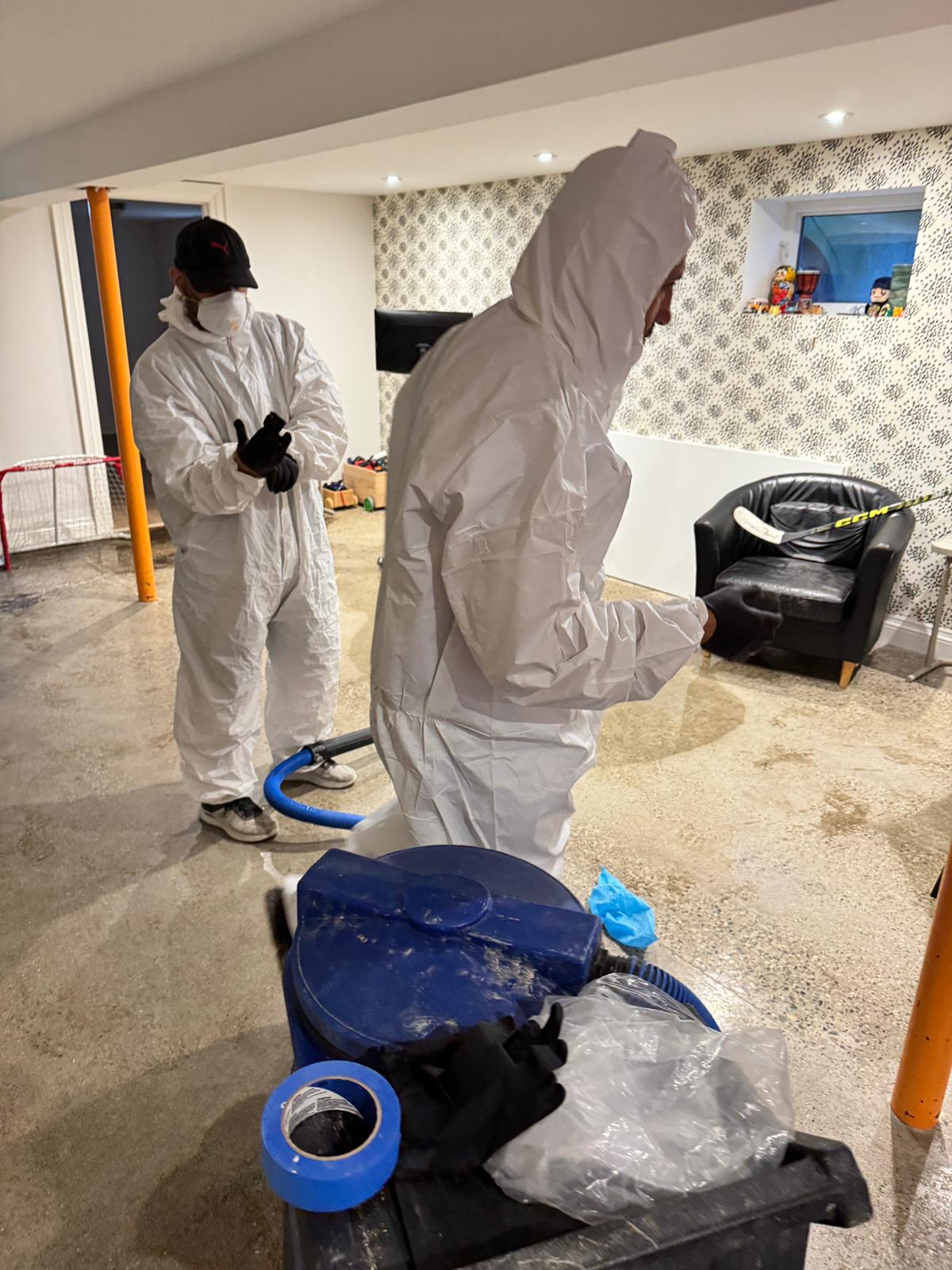
Toronto's combined sewer system presents another layer of risk. During heavy rainfall, the combined sewer network can surcharge and back up into basements, particularly in older neighbourhoods where the system hasn't been separated. Even a single flooding event leaves hidden moisture in wall cavities, under flooring, and behind finished surfaces that, if not professionally dried, can support mold growth within 24 to 48 hours.
Learn more about our Toronto restoration services or explore our full mold removal process.
Toronto Mold Scenarios We Handle Most
Toronto's diverse building stock and climate produce a recognizable set of recurring mold scenarios. These are the situations our team encounters most frequently across the city:
- Post-flooding mold in older Toronto basements: After combined sewer backup or storm flooding in lower-level units, mold establishes within 24–48 hours if materials aren't dried immediately. Finished basement walls and subfloors trap moisture and accelerate this process significantly.
- Attic mold from ice dams and poor ventilation: Common in Toronto's older detached homes where bathroom exhausts were vented into attic space for decades. Seasonal temperature fluctuations, Toronto's winters push attic temperatures far below freezing while interiors stay warm, accelerate condensation-driven mold growth on roof sheathing and framing.
- Bathroom mold in older condo units: Older Toronto condos have limited exhaust capacity and were designed for a time when showers were shorter and less frequent. Persistent humidity leads to visible mold in grout lines, behind tile, and in the wall cavities behind shower surrounds, a problem that compounds over years before owners realize how far it has spread.
- Hidden wall cavity mold: Slow leaks behind kitchen and bathroom walls in older Toronto homes often go undetected for months or years. By the time mold becomes visible on the surface of a wall, significant growth has typically established itself on the back face of the drywall and on the framing behind it.
- Crawl space mold: Many Toronto homes, particularly in Leaside, East York, and older North York neighbourhoods, have partial or full crawl spaces beneath the main floor. Without proper encapsulation, these low-clearance spaces become mold factories. Visit our mold inspection page to learn how we assess these difficult-to-access areas.
Our Toronto Mold Removal Process
Every mold removal project we undertake in Toronto follows the same systematic process. There are no shortcuts, each step is essential to ensure complete remediation rather than a temporary surface fix.
- Free inspection and moisture assessment: We visit your Toronto home, assess the visible mold, and use moisture meters and thermal imaging to map the full extent of moisture intrusion, including areas you can't see.
- Containment setup: We seal the affected area with 6-mil polyethylene sheeting and establish negative air pressure using HEPA-filtered air scrubbers to prevent spore migration to unaffected areas of the home.
- HEPA vacuuming of mold-affected surfaces: All accessible mold-affected surfaces are HEPA-vacuumed to capture loose spores before any disturbance that could disperse them further.
- Antifungal treatment: EPA-registered antifungal solutions are applied to affected structural surfaces, wood framing, concrete, masonry, to eliminate surface mold and inhibit regrowth.
- Material removal where necessary: Porous materials that cannot be effectively cleaned, drywall, insulation, carpet, are removed, double-bagged, and properly disposed of per Ontario regulations.
- Post-remediation air quality testing: Independent lab air sampling verifies that mold spore counts have returned to normal background levels before containment is removed and the area is cleared for re-occupancy.
See our complete mold removal service page for a detailed breakdown of each step and what to expect.
Does My Toronto Home Insurance Cover Mold Removal?
Most Toronto home insurance policies will cover mold removal when the mold is a direct result of a covered water damage event, a burst pipe, appliance failure, or sudden roof leak, for example. The key phrase is "sudden and accidental": if the water event itself would have been covered, the resulting mold typically qualifies as well, provided you acted promptly after discovering the damage.
What standard policies generally do not cover is mold that has developed from long-term dampness, chronic leaks, or deferred maintenance. Insurers will often argue that moisture-related mold resulting from neglect falls outside coverage, and that argument holds unless you can demonstrate a specific covered event triggered the growth.
We provide detailed documentation throughout the remediation process: moisture readings, photo documentation of the mold and its likely source, written scope-of-work reports, and post-remediation clearance testing. This package is specifically structured to support insurance claims. We also offer direct billing to insurance companies for covered claims. Visit our insurance claims page to learn more about how the process works.
Why Choose Us
IICRC Certified
Our Toronto mold technicians hold IICRC mold remediation certification, the industry gold standard for professional mold removal and remediation.
Free Inspection
We provide a free mold inspection and assessment for Toronto homeowners before any remediation work begins, no obligation to proceed.
Air Quality Testing
Post-remediation air quality testing by an independent accredited lab verifies that mold spore counts have returned to normal background levels.
Insurance Support
We handle documentation and direct billing to your insurance provider for covered mold claims, reducing stress throughout the process.
All Building Types
From Victorian homes to modern condos, we understand Toronto's diverse building stock and adapt our remediation approach accordingly.
24/7 Availability
Emergency mold containment available 24/7 for Toronto homeowners and property managers who need immediate response to active water and mold situations.
Frequently Asked Questions
Mold in Your Toronto Home? Get a Free Inspection.
Call (416) 474-6364 or request your free assessment online. We serve all Toronto neighborhoods.