
Professional Structural Drying Services
After water extraction, thorough structural drying is critical to prevent mold, warping, and further damage. We use commercial-grade dehumidifiers, air movers, and daily moisture monitoring to ensure your property dries completely. Most structural drying takes 3 to 5 days, verified by moisture readings rather than time alone.
Why Professional Structural Drying Matters
Removing standing water is only the first step in water damage restoration. Hidden moisture trapped in walls, subfloors, ceiling cavities, and structural framing causes serious problems if not properly dried. Mold begins growing within 24 to 48 hours in damp environments, and once mold takes hold, it spreads rapidly through porous building materials. Even small amounts of residual moisture create ideal conditions for mold colonization.
Moisture also causes structural damage over time. Wood framing absorbs water and begins to warp, twist, and lose strength. Drywall becomes soft and crumbles. Flooring materials swell, buckle, and delaminate. Nails pop out of framing as wood swells and contracts. Metal components rust and corrode. Paint bubbles and peels. Insulation becomes compressed and loses its R-value when wet.
Professional structural drying prevents these problems by reducing moisture content in all building materials to safe levels. We use commercial-grade equipment that removes 10 to 20 times more moisture per day than household dehumidifiers and fans. Our technicians monitor moisture levels daily using calibrated meters and continue drying until all materials reach acceptable moisture content standards established by the IICRC.
Our Drying Equipment & Process
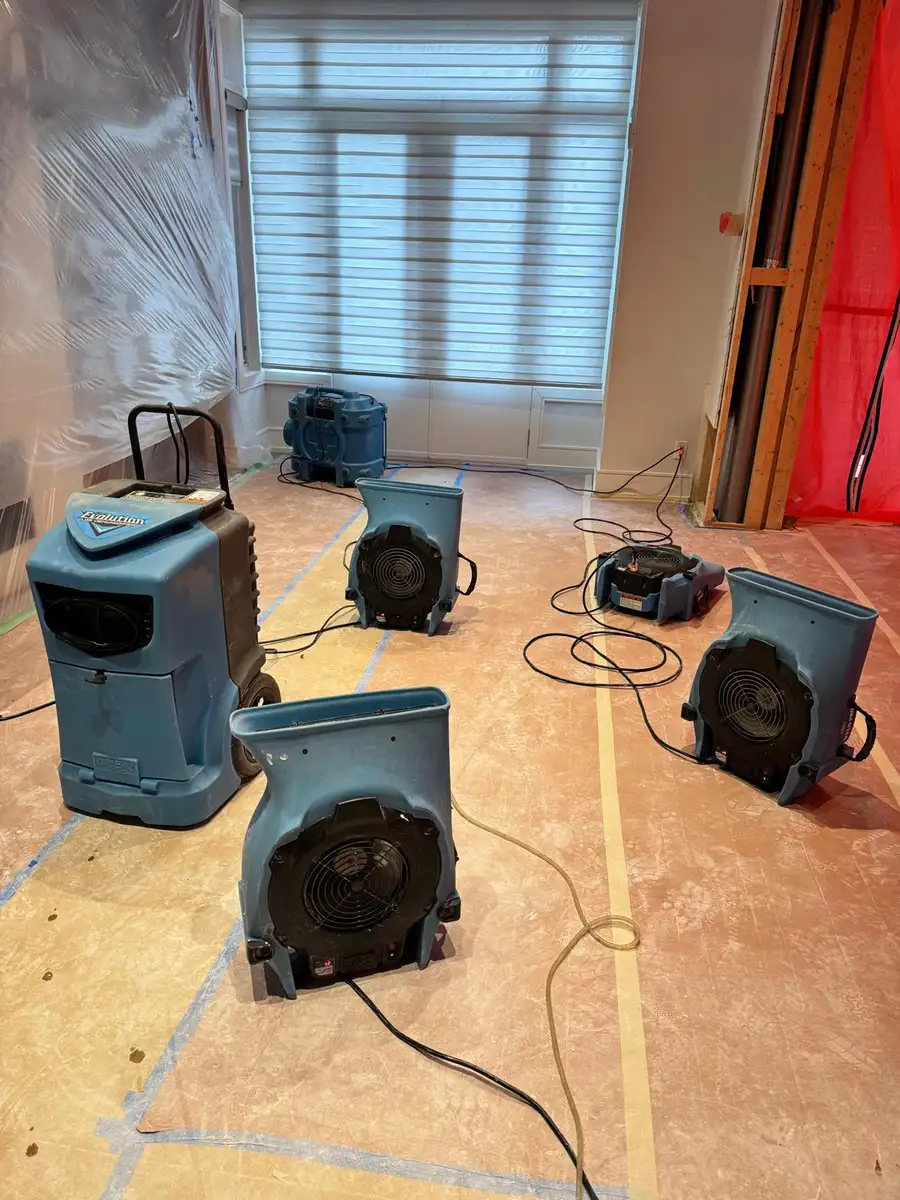
We deploy commercial-grade LGR (Low Grain Refrigerant) dehumidifiers throughout the affected area. These industrial units remove moisture from the air far more efficiently than household dehumidifiers. LGR technology allows the equipment to operate effectively even in cold conditions, which is critical for basement flooding and winter water damage in Toronto and Scarborough.
High-velocity air movers create rapid air circulation across wet surfaces and through wall cavities. This constant air movement accelerates evaporation from materials and carries moisture to the dehumidifiers. We position air movers strategically based on thermal imaging and moisture readings to direct airflow where it's needed most. Our equipment operates continuously, 24 hours per day, until drying goals are achieved.
- LGR Dehumidifiers: Remove up to 200 pints of moisture per day, far exceeding household units that remove 30-50 pints.
- High-Velocity Air Movers: Create rapid air circulation to accelerate evaporation from wet materials.
- Thermal Imaging Cameras: Detect hidden moisture behind walls and in ceiling cavities without destructive testing.
- Daily Moisture Readings: Professional moisture meters measure moisture content in wood, drywall, and concrete to verify drying progress.
DIY Drying vs Professional Drying
Household fans and portable dehumidifiers cannot dry structural materials adequately after significant water damage. A typical household dehumidifier removes 30 to 50 pints of moisture per day. A single commercial LGR dehumidifier removes 150 to 200 pints per day. For a moderate water loss affecting 500 square feet, professional equipment completes drying in 3 to 5 days while household equipment would take 2 to 3 weeks or longer.
The extended timeline matters because mold begins growing within 24 to 48 hours. By the time household equipment completes drying, mold has already colonized damp materials behind walls and under flooring. Professional structural drying reaches safe moisture levels before mold can establish, eliminating the need for costly mold remediation after water damage restoration.
Monitoring & Documentation
Our technicians visit your property daily to record moisture readings from all affected materials. We use pin-type moisture meters for wood and drywall, and non-invasive meters for concrete and other hard surfaces. Readings are recorded in detailed drying logs that track moisture content over time and verify when materials have reached acceptable dry standards.
This documentation serves two critical purposes. First, it ensures the drying process is thorough and scientifically verified rather than based on guesswork or arbitrary timelines. Second, it provides your insurance company with proof that professional structural drying was performed according to IICRC standards. Insurance adjusters require this documentation to process water damage claims and verify that proper mitigation prevented mold and secondary damage.
Related Services
Why Choose Us
Commercial-Grade Equipment
LGR dehumidifiers and high-velocity air movers remove moisture 10-20x faster than household units.
Daily Moisture Monitoring
Professional meter readings verify drying progress and completion to IICRC standards.
Mold Prevention
Rapid drying reaches safe moisture levels before mold can colonize damp materials.
Insurance Documentation
Detailed drying logs and moisture readings support your insurance claim.
Frequently Asked Questions
Need Structural Drying? We're Available 24/7.
Call (416) 474-6364 for immediate response