
Mold Remediation in Toronto
Mold remediation is more than just cleaning mold off surfaces. It's a systematic process of containment, removal, filtration, and verification. Our Toronto team follows strict IICRC S520 protocols to ensure complete, documented remediation.
What Is Mold Remediation — and Why It's Different from Mold Removal
If you've been searching for help with mold in your Toronto home, you've probably encountered both terms: "mold removal" and "mold remediation." The distinction matters. "Mold removal" is the colloquial term most homeowners use — and there's nothing wrong with using it. But "mold remediation" is the industry term that describes the full, systematic process that professionals actually perform.
True remediation doesn't just mean scrubbing mold off a surface. That approach disperses spores, spreads contamination, and addresses the symptom rather than the problem. Proper mold remediation means establishing containment to prevent cross-contamination to the rest of the home, running HEPA-filtered air scrubbers under negative pressure to capture airborne spores generated during the work, physically removing contaminated materials that cannot be cleaned, treating underlying structural surfaces with EPA-registered antifungals, addressing the moisture source that allowed mold to grow, and verifying the results through post-remediation air quality testing analyzed by an independent laboratory.
Each of those steps exists for a reason. Skip containment and you spread mold through the HVAC system. Skip post-remediation testing and you have no documented proof the job was done correctly. Skip addressing the moisture source and the mold will return. See our mold removal service page for a general overview of the process.
The Mold Remediation Process: What to Expect in Your Toronto Home
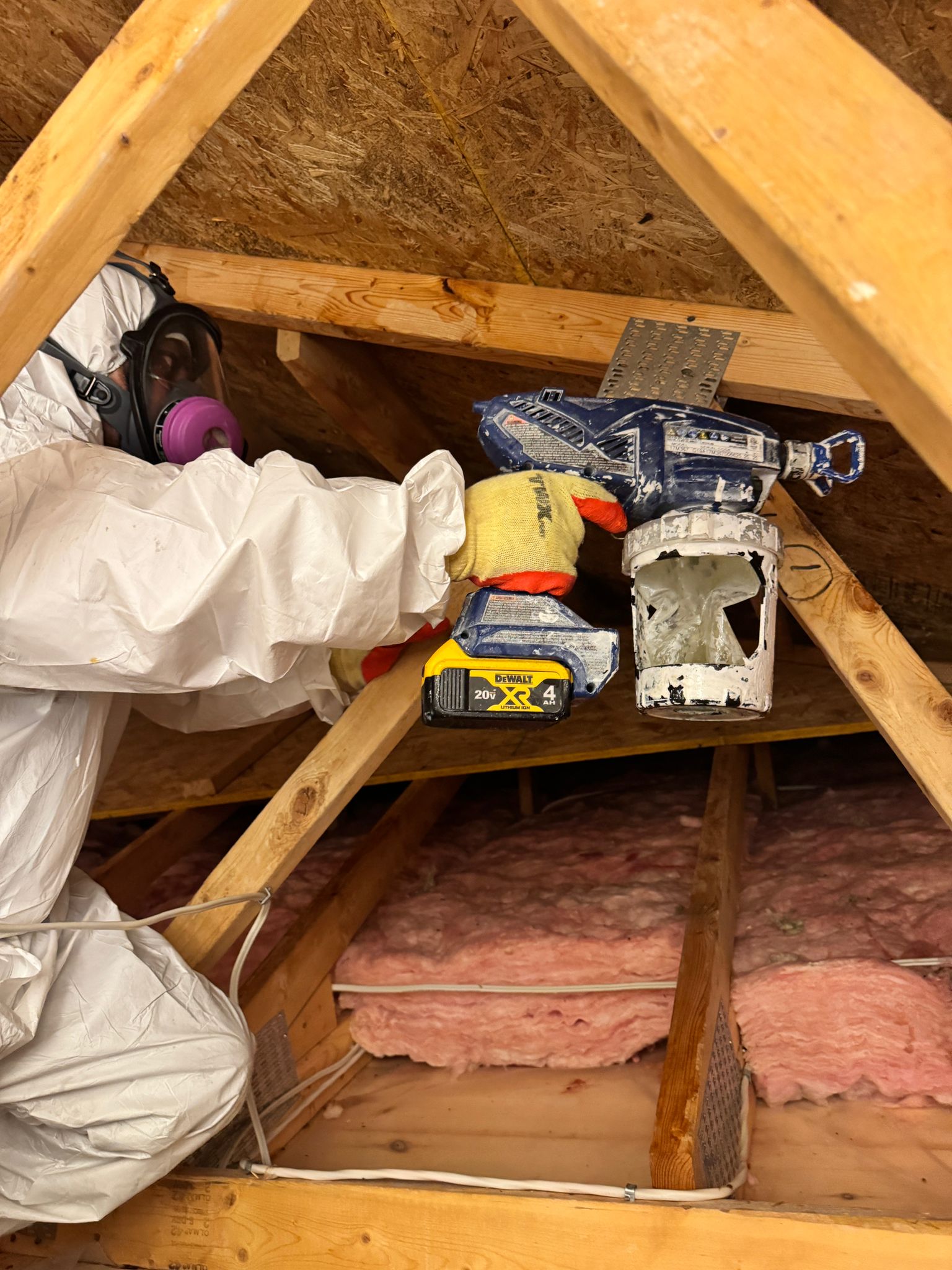
Attic mold remediation is one of the most technically demanding jobs our team performs in Toronto homes. The technician shown here is fully suited in Tyvek protective gear with a supplied-air respirator, applying antifungal treatment to attic framing — the only safe way to work inside a contaminated attic space.
Here is what the full remediation process looks like from start to finish when our team works in a Toronto home:
- Assessment and moisture mapping: Before any remediation begins, we map the full extent of mold growth and moisture intrusion using thermal imaging cameras and both pin and pinless moisture meters. Thermal imaging identifies temperature anomalies that indicate hidden moisture behind drywall, above ceilings, and under floors — areas where mold grows unseen. This assessment establishes the true scope and ensures we don't leave hidden growth untreated.
- Containment setup: We seal the affected area with 6-mil polyethylene sheeting from floor to ceiling. All supply and return vents within the containment zone are sealed to prevent spore migration through the HVAC system. Negative air pressure is established using HEPA-filtered air scrubbers, ensuring that any airborne spores generated during remediation are exhausted out of the containment zone rather than into the rest of the home.
- Personal protective equipment: All technicians working inside containment wear N95 or full-face respirators, Tyvek suits, nitrile gloves, and boot covers. This is non-negotiable regardless of the project size. Mold remediation without proper PPE creates health risks for the technician and increases the likelihood of cross-contamination.
- HEPA vacuuming and surface cleaning: Mold-affected surfaces that can be cleaned — structural wood, concrete block, poured concrete — are HEPA-vacuumed to remove loose spores, then wiped with EPA-registered antifungal solutions. Porous materials that cannot be effectively cleaned — drywall, insulation, carpet, ceiling tiles — are carefully removed and double-bagged for disposal inside the containment zone.
- Structural drying: If any remaining structural members or building materials are still above moisture equilibrium, industrial drying equipment — desiccant or refrigerant dehumidifiers, high-velocity air movers — is deployed to bring moisture content to acceptable levels before the area is closed up. Closing a space while structural materials are still elevated in moisture content invites mold regrowth.
- Post-remediation verification (PRV): A final clearance inspection and air sampling is performed after containment is still in place. Samples are sent to an independent, accredited third-party laboratory. We provide the full clearance report — including spore counts and genera — to the homeowner and, where applicable, directly to their insurance company as part of the claims documentation.
Toronto Building Types and Their Remediation Challenges
Not all Toronto homes are remediated the same way. The building type, age, and construction materials shape both where mold grows and how remediation must proceed:
- Pre-war brick homes (pre-1940s): Found throughout the Annex, Cabbagetown, Roncesvalles, and East End neighbourhoods. Solid brick construction absorbs moisture from the exterior over decades. Mold commonly grows on the back face of interior finishes — plaster, wood lath — where condensation forms against the cold brick. A complete mold assessment in these homes must include the wall cavity, accessible through strategic exploratory openings.
- 1950s–70s bungalows: The dominant housing form across East York, North York, Etobicoke, and Scarborough. These homes typically have fiberglass batt insulation that loses thermal performance and traps moisture when wet. Wet fiberglass insulation must be removed and replaced — it cannot be dried in place effectively and becomes a persistent moisture reservoir that feeds mold regrowth.
- Condos and multi-unit apartments: Remediation in Toronto's multi-unit residential buildings requires coordination with property management and must follow the specific protocols outlined in the condo corporation's governing documents. Adjacent units may need to be assessed. Insurance responsibility between the unit owner's policy and the condo corporation's policy must be determined before work begins.
Request Remediation Assessment
Available 24/7 across the GTA
(416) 474-6364Or request a free estimate onlineWhy Choose Us
IICRC S520 Protocols
We follow the IICRC Standard for Professional Mold Remediation on every Toronto project — the definitive industry standard for safe, complete remediation.
Independent Lab Testing
Post-remediation air sampling is analyzed by an independent accredited laboratory, not in-house equipment — providing objective, third-party verified results.
Documented Process
Complete photo documentation of every stage of remediation, suitable for insurance claims, legal purposes, and future property transactions.
Negative Air Pressure
Proper containment under negative air pressure prevents cross-contamination to other areas of your Toronto home during active remediation work.
Certified Technicians
All remediation work performed by IICRC-certified technicians — not subcontractors. The same certified team attends the job from assessment through clearance.
Complete Service
We handle the full process from assessment through clearance testing — no hand-offs between separate inspection, remediation, and testing contractors.
Frequently Asked Questions
Professional Mold Remediation in Toronto — Certified Process.
Call (416) 474-6364 or request your free assessment. We follow IICRC S520 on every Toronto project.