
Water Damage Restoration in Toronto
Water damage in Toronto takes many forms, a condo flood from the unit above, a burst pipe in a Victorian home, a basement flood from Toronto's combined sewer system. Whatever the source, our IICRC-certified team responds 24/7 with full restoration services.
Toronto's Unique Water Damage Landscape
Water damage in Toronto doesn't follow a single pattern. The city's diverse building stock, aging infrastructure, and dense urban environment create a wider range of water damage scenarios than almost any other Canadian city.
Condo flooding from unit-above leaks is among the most common and most complicated scenarios in Toronto. With hundreds of thousands of condo units across the city, incidents where water from one unit migrates to units below are a daily occurrence. These events involve unique insurance responsibility questions, the source unit's owner, the condo corporation, the building insurer, and the affected unit's policy may all be involved.
Pre-war homes in established neighbourhoods carry aging galvanized steel or lead supply lines that are increasingly prone to pinhole leaks and catastrophic failure. Spring thaw creates rapid freeze-thaw cycling that stresses exterior pipes and hose bibs. Appliance failures, dishwashers, washing machines, water heaters, account for a substantial share of residential water damage claims in Toronto's multi-unit buildings.
Toronto's combined sewer system produces basement flooding during heavy rainfall events in older neighbourhoods where the combined system hasn't been upgraded. These events are Category 3 (sewage contamination) and require specific protocols.
Learn more about our full range of Toronto restoration services or visit our water damage restoration service page.
Condo Water Damage in Toronto
Toronto has one of the highest rates of condo ownership of any city in North America, and with that density comes a distinctive water damage problem: flooding that originates in one unit and migrates down through the floors below. We handle a significant number of these multi-unit condo water damage events every year.
When your Toronto condo unit floods, the first question is always: where did the water come from? The answer determines who bears responsibility, and which insurance policy responds. If the water originated from a failed appliance or plumbing fixture within another owner's unit, that unit owner's liability coverage typically responds for damage to your unit. If the source was a common element, a pipe within the building walls, a roof membrane, a common area plumbing line, the condo corporation's master insurance policy is usually the applicable coverage.
This determination is not always straightforward. We document the source and the migration path thoroughly with photographs, moisture readings, and written reports, the kind of documentation that insurance adjusters and condo boards need to make coverage determinations. We work with property management, the condo corporation's insurer, and individual unit owners' policies on these complex multi-party situations. Visit our insurance claims page for more detail on how we support the claims process.
Toronto's Aging Infrastructure and Basement Flooding
Basement flooding is one of Toronto's most persistent residential problems. The city's older neighbourhoods, Riverdale, The Annex, East York, Leslieville, Roncesvalles, and much of North York, sit above a combined sewer system that was designed for a population fraction of today's. During heavy rain events, the combined system can surcharge and back up through basement floor drains and plumbing fixtures, flooding lower levels with what is classified as Category 3 sewage-contaminated water.
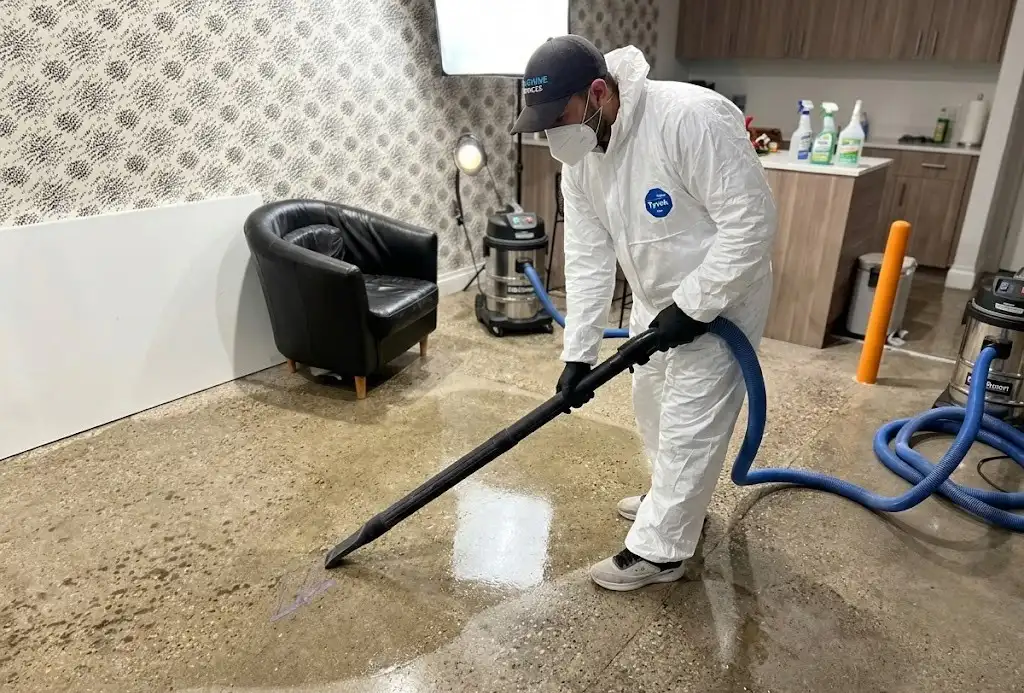
The City of Toronto acknowledges this problem and runs a Basement Flooding Protection Subsidy Program that helps homeowners fund upgrades, backwater valves, sump pumps, sewer lateral improvements, that reduce the risk of future flooding. We advise Toronto homeowners on these preventive options as part of our post-restoration process.
If your Toronto basement has flooded, the steps immediately after the event matter enormously. Turn off electrical breakers to the flooded area if it is safe to do so. Do not enter sewage-contaminated water without proper protective equipment. Call us immediately, our 24/7 response team can typically be on-site within 1–2 hours of your call. The faster professional drying equipment is deployed, the lower the overall damage and restoration cost. Visit our basement flooding cleanup page for specific guidance.
Spring Thaw and Storm Season in Toronto
Toronto experiences predictable seasonal peaks in water damage that our team prepares for every year. Understanding these patterns helps homeowners take proactive steps before the peak periods arrive.
Late March and April bring rapid snowmelt combined with frozen or saturated ground. Water that can't penetrate frozen soil runs across the surface and pools against foundations, particularly in lower-lying areas of the city near the Don River and Humber River valleys. Homes with compromised weeping tile drainage or cracked foundation walls are most vulnerable during this period.
Summer storms in Toronto have become increasingly severe. The July 2013 storm dropped more rain in a few hours than Hurricane Hazel, a storm that has defined Toronto's flood management framework for decades. Intense summer downpours overwhelm storm drainage infrastructure and produce rapid flooding across the city.
The winter-to-spring transition creates ice dam conditions on older roofs in Toronto. Ice dams form when snow melts on the upper portion of a warm roof and refreezes at the cold eaves, backing water up under shingles and into the attic and wall assemblies below. This is a slow-developing damage mechanism that homeowners often don't discover until spring, by which point mold may already be establishing in attic insulation and roof sheathing.
Why Choose Us
24/7 Emergency Response
We maintain genuine 24/7 availability for Toronto water damage emergencies. Call any time, day, night, weekends, or holidays.
Condo Specialists
Extensive experience with Toronto condo water damage, multi-unit insurance coordination, and property management protocols.
Insurance Billing
We document damage thoroughly and offer direct billing to insurance companies for covered water damage claims in Toronto.
IICRC Certified
All water damage restoration performed to IICRC S500 standards, the industry standard for professional water damage restoration.
Complete Restoration
From emergency extraction through structural drying, repairs, and final finishing, one team handles the entire restoration.
All Toronto Neighborhoods
We serve all Toronto neighbourhoods including downtown, Midtown, East End, West End, North York, Etobicoke, and Scarborough.
Frequently Asked Questions
Water Damage in Toronto? We Respond 24/7.
Call (416) 474-6364 now. We dispatch immediately for Toronto water damage emergencies.