
How Does Water Damage Restoration Actually Work?
How water damage restoration actually works in the GTA, what you can DIY, what needs an IICRC pro, and where homeowners get it wrong.
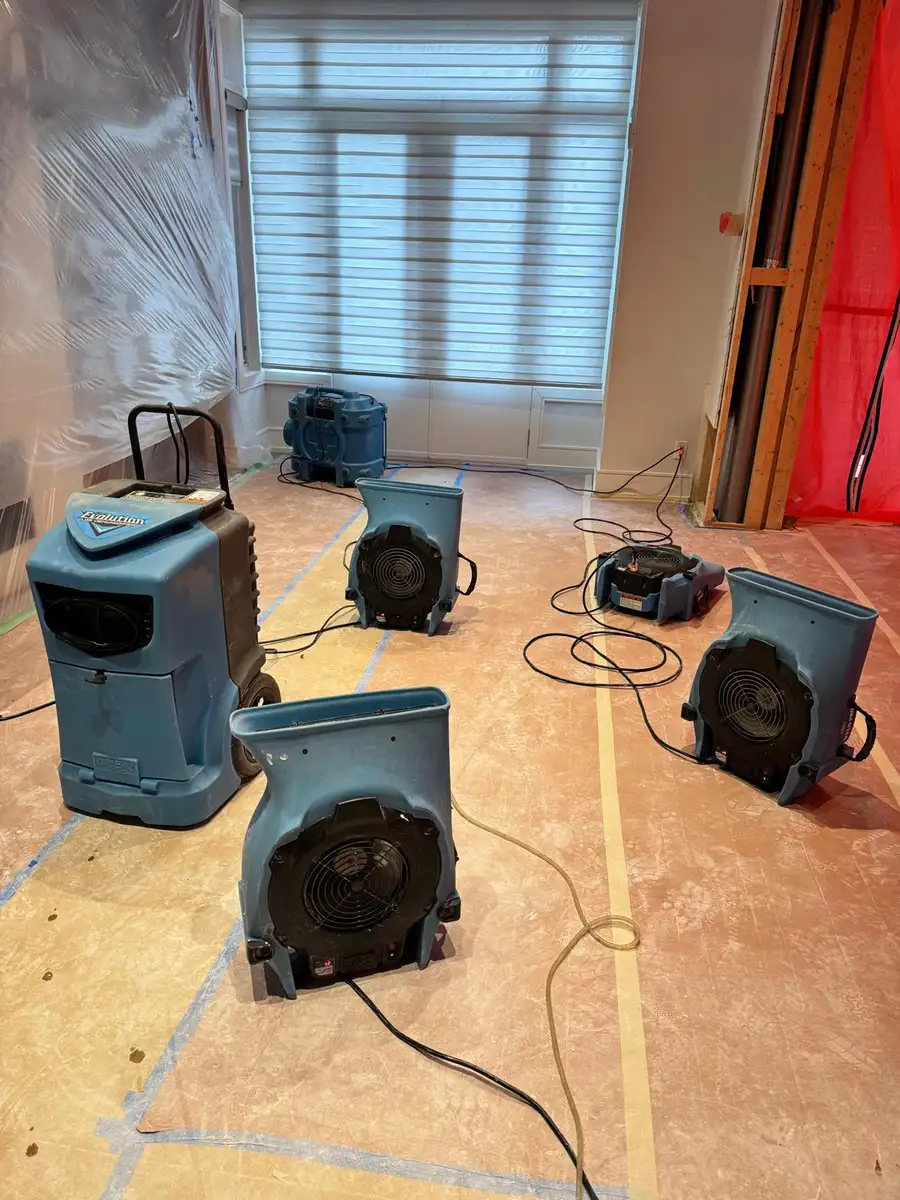
Most water damage articles online are written by restoration companies trying to scare you into calling them. This is not that. There are real situations where a homeowner with a wet/dry vac and a couple of fans can handle a small leak and save the cost of a service call. There are also situations where doing it yourself turns a $4,000 cleanup into a $30,000 reconstruction job because mould got behind the drywall while you ran box fans for a week. This guide is the honest version: how restoration actually works, where the DIY line is, and what changes when an IICRC-certified crew shows up.
What “Restoration” Actually Means (vs. Cleanup, vs. Repair)
The restoration industry uses three terms interchangeably that mean different things:
- •Cleanup: removing standing water and debris. Mopping, vacuuming, towels.
- •Mitigation: preventing further damage. Stopping the source, extracting standing water, drying structural materials, applying antimicrobials. The emergency phase.
- •Restoration: putting the building back to pre-loss condition. Replacing drywall, flooring, paint, trim, cabinetry, insulation. The reconstruction phase.
A “water damage restoration” job in the GTA usually means all three, the same crew handles emergency mitigation, then the rebuild, then bills your insurance for both. Some lower-cost companies only do mitigation and leave you to find your own contractor for the rebuild. That is worth asking about before you sign anything.
The whole process follows the IICRC S500 standard, the industry benchmark for water damage restoration. It defines water categories (1 = clean, 2 = grey, 3 = black/sewage), drying targets, and documentation requirements that insurance companies expect to see on a claim.
The DIY Scenarios Where Homeowners Can Handle It
You can probably handle water damage yourself if all of these are true:
- •The water source is clean (Category 1: supply line, rainwater through a roof leak). Not sewage. Not greywater that has been sitting from a dishwasher or washing machine.
- •You found it within a few hours.
- •Total wet area is under about 25 square feet, a small bathroom, a corner of a room.
- •Water hit only hard, non-porous surfaces (tile, sealed concrete, vinyl) or a small section of carpet you can pull and dry separately.
- •You have a wet/dry shop vac (4+ gallons), high-velocity fans, and ideally a residential dehumidifier.
- •The wet area is on a ground floor with good airflow, not a finished basement with poor ventilation.
Example: a small supply-line leak under a kitchen sink, caught fast, that only got the cabinet floor and a small section of vinyl. Pull the vinyl back, dry the subfloor with a fan and dehumidifier for 48–72 hours, replace the vinyl, done. DIY cost: $50–150 in supplies. Same job done professionally: $1,500–3,000.
Sometimes DIY is the right call. Sometimes it is penny-wise and pound-foolish.
The Scenarios Where DIY Makes Things Worse
DIY turns into a disaster when any of these are true:
- •Sewer backup or any Category 3 water. Carries pathogens (E. coli, Hepatitis A, Giardia) and requires PPE, biocide, and contaminated material disposal. You do not have the equipment.
- •Wet drywall above 2 feet from the floor. Drywall wicks water vertically. By the time the visible part is wet, water has already moved into wall cavities and insulation behind it. You cannot dry that with fans.
- •Wet hardwood that is already cupping. Drying it from the surface alone will not save it, you need to address moisture from below, often by removing flooring or pulling subfloor.
- •A finished basement. Poor airflow, concrete that holds moisture, finished walls and ceilings hiding wet cavities, and Toronto's humid summers all conspire. Basements need commercial-grade LGR dehumidification, not residential.
- •Pre-1990 home where you would have to cut drywall or remove insulation. Vermiculite insulation and some older drywall can contain asbestos. You cannot safely cut into that.
- •Water that has been sitting more than 24 hours. Mould growth has likely started. You are not drying anymore, you are remediating, which requires containment and HEPA filtration.
- •Insurance is involved and you want maximum coverage. Insurers want professional moisture readings, daily monitoring logs, and a documented scope. “I dried it with fans” does not get reimbursed.
If you are not sure which side of the line you are on, get a free assessment before you spend a week running fans for nothing. For more on what the first day looks like, see what to do after water damage in the GTA.
What an IICRC-Certified Team Does That You Can't
IICRC certification means a technician has been trained and tested on the IICRC S500 standard, the same standard insurance adjusters reference when reviewing claims. Practically, the difference looks like this:
- •Water classification: categorize the water (clean/grey/black) and damage class (1–4 based on how much porous material is wet). This determines protocol and PPE.
- •Hidden moisture detection: thermal imaging and pinless moisture meters find water inside walls, under floors, and above ceilings that you would never know was there.
- •Engineered drying: air movers and dehumidification capacity calculated based on room volume, materials, and existing moisture content. Not guessing.
- •Daily monitoring: moisture readings every 24 hours, equipment adjusted as the structure dries. Documentation goes to the insurer.
- •Antimicrobial application: EPA-registered biocides on porous materials that were wet, to suppress mould while drying continues.
- •Containment when needed: plastic barriers and HEPA negative-air machines if mould is suspected, so spores do not spread to clean areas during demolition.
You cannot replicate this with consumer equipment, and the difference shows up at the insurance claim and at the 30-day mark when undetected moisture turns into mould behind a wall you thought was fine. If mould is already part of the picture, that is a separate workflow, see our mould removal & remediation services.
Equipment Difference: Why It Matters
Shop vac vs. truck-mounted extractor
A 6-gallon shop vac removes maybe 5–10 gallons per minute of water from a hard surface, and only if the surface is wet, not the carpet padding underneath. A truck-mounted extractor pulls 100+ gallons per minute and can extract water from carpet padding through the carpet itself without removing the carpet. For a basement flood, the difference is 8 hours of emptying a shop vac vs. 30 minutes with a truck mount.
Box fans vs. commercial air movers
A residential box fan moves 1,000–2,000 CFM of air across a wide area at low velocity. A commercial axial air mover moves 2,500–3,500 CFM in a focused jet at high velocity, designed specifically to evaporate moisture from surfaces. Per IICRC S500, you need one air mover for roughly every 10–16 linear feet of wet wall. For a typical Toronto basement that is 6–10 air movers running for 3–5 days. Box fans cannot generate enough surface evaporation to compete.
Dehumidifier sizing
A residential 50-pint dehumidifier removes about 3 gallons of water per day in average conditions. A commercial Low-Grain Refrigerant (LGR) dehumidifier removes 25+ gallons per day in the same conditions and works at much lower humidity (down to 30% RH instead of 50%+). After a basement flood with hundreds of gallons of standing water, the air becomes saturated. A residential dehumidifier short-cycles and fails to bring humidity below 60%, leaving plenty of moisture for mould. An LGR pulls humidity below 40% within a day.
Not Sure if You Need a Pro?
Free on-site assessment with thermal imaging and moisture meters. We will tell you honestly whether the job needs a professional crew or if you can handle it yourself. Call (416) 474-6364.
How Long Professional Restoration Takes in a Typical GTA Home
A professional restoration job in the GTA breaks into two phases:
Mitigation phase (water out, structure dry):
- •Day 1, emergency response, extraction, equipment setup, antimicrobial treatment.
- •Days 2–4, drying. Air movers and dehumidifiers run 24/7. Moisture readings daily.
- •Day 5, final moisture readings confirm dry. Equipment removed.
Restoration phase (rebuild):
- •Days 6–7, insurance scope finalized, materials ordered.
- •Days 8–14, drywall, primer, paint, flooring, trim.
- •Day 15+, final inspection, walkthrough, sign-off.
For a small one-room flood, the entire process is often 7–10 days. For a fully finished basement after a major flood with floor-to-ceiling damage, 3–4 weeks. For a multi-room sewage backup, 4–6 weeks. Most of that time is drying. You cannot rush evaporation, and trying to (with too much heat, for example) creates new problems with wood movement.
What It Costs and What Insurance Covers
GTA water damage restoration costs vary widely based on water category, area affected, and materials involved:
- •Small clean-water leak (one room, no structural): $1,500–3,000
- •Single-room basement flood (clean water): $3,500–7,000
- •Fully finished basement flood: $10,000–25,000
- •Sewer backup (Category 3): add 30–50% for biohazard protocols
- •Multi-floor flooding from upper-floor source: $15,000–50,000+
Insurance typically covers sudden and accidental water damage, burst pipes, appliance failures, storm-driven roof leaks. Sewer backup and overland flooding are usually separate endorsements you have to add to your policy. Gradual leaks and maintenance issues are not covered.
Most reputable restoration companies in the GTA bill insurance directly with no out-of-pocket for the homeowner beyond the deductible. Be careful of companies that demand cash up front or will not bill insurance, that is usually a sign they are uninsured or know they will not get approved by the adjuster.
Indoor air quality after major water damage matters too. Health Canada has residential indoor air quality guidance on what is safe and what is not. If you are still smelling musty notes after the restoration crew leaves, drying was not complete or mould is established somewhere, time for a mould inspection.
Bottom Line
Restoration is a process, not a service call. Done right, it follows IICRC S500: extract water, dry the structure with engineered equipment, document moisture readings daily, then rebuild. DIY makes sense for small clean-water spills you catch fast. Anything bigger, anything porous, anything past 24 hours, the cost of a pro is much less than the cost of mould remediation later.