
What to Do After Water Damage in the First 24 Hours
Step-by-step guide for the first 24 hours after water damage in the GTA. Stop the source, document, dry, and when to call a pro.
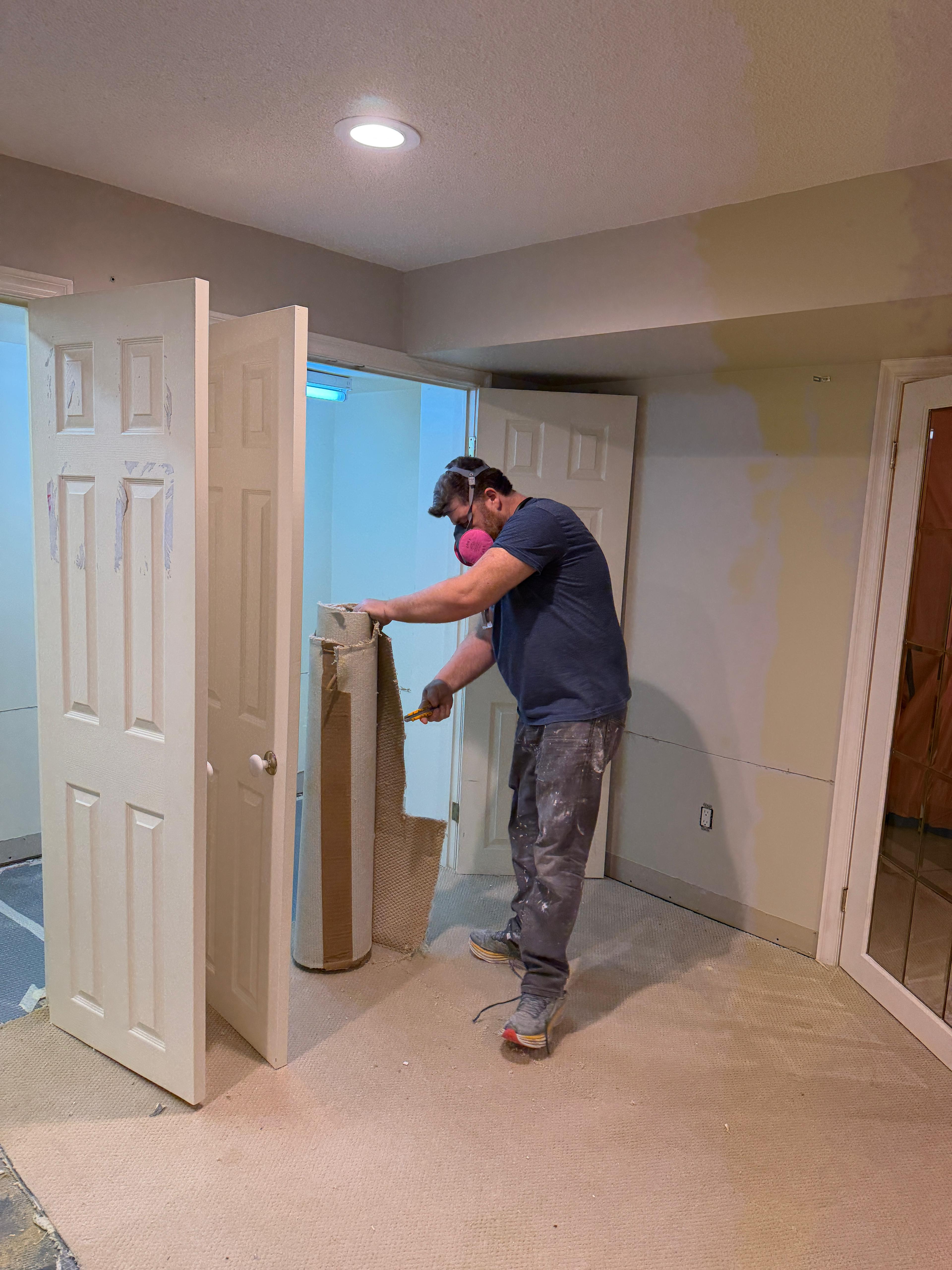
The first 24 hours after water damage decide whether you're looking at a $3,000 cleanup or a $30,000 reconstruction. In the GTA, mould can establish itself in wet drywall in as little as 24 to 48 hours, and the longer water sits, the more it migrates into subfloors, framing, and insulation where you can't see it. This guide walks through exactly what to do in the first day after a burst pipe, basement flood, sewer backup, or appliance leak, in the order that protects your home, your health, and your insurance claim.
Step 1: Stop the Water Source (and Mind the Electricity)
Before anything else, stop more water from entering. Find your main water shutoff valve, usually in the basement near the front of the house, next to the water meter. Turn it clockwise until it stops. If the leak is from a fixture (toilet, sink, dishwasher, washing machine), use the local shutoff under or behind it. For a roof or window leak during a storm, you can't stop the source. Skip ahead to Step 3 and protect your belongings while the storm passes.
Electrical safety: Never walk into standing water if there's any chance the water has reached outlets, extension cords, or appliances. Water and electricity together kill people every year. If your basement is flooded above the level of electrical baseboards or near a panel, leave the area and call your utility (Toronto Hydro, Alectra, Oshawa PUC, etc.) to cut power at the meter before you go back in. If only a small area is wet and you can clearly reach your panel without stepping in water, shut off the affected circuits at the breaker. When in doubt, stay out and call.
Step 2: Call Your Insurance and Document Everything
Once water is shut off and you're safely on dry ground, call your insurance company's 24/7 claims line directly, not your broker, not in the morning. Most Ontario homeowner policies require notification “as soon as practicable,” and waiting can give the insurer grounds to deny or reduce your claim later.
Before you move anything or start cleanup, document the damage thoroughly. Take wide shots of every affected room from multiple angles. Take close-ups of damaged drywall, baseboards, flooring, and any visible water lines. Photograph or video every damaged item, including model numbers and serial numbers where visible. Then take a slow, time-stamped video walking through the home narrating what you see. This level of documentation is what the Insurance Bureau of Canada recommends as best practice for water damage claims.
Start a written log that day: when you noticed the damage, when you shut off the water, when you called insurance, who you spoke to, the claim number, and every action you take from this point on. Save receipts for any cleanup supplies, hotel stays if you're displaced, and replacement of essential items. Insurance adjusters move faster on well-documented claims, and you'll need this log if there's any dispute later.
Step 3: Remove Belongings From Standing Water
Anything porous sitting in water has a clock on it. Lift furniture off wet carpets. Even a 2x4 or aluminum foil pad under each leg buys you time and prevents finish stains from bleeding into carpet padding. Move books, papers, electronics, and upholstered furniture to a dry, ventilated area on a different floor.
Hardwood and laminate floors can develop permanent buckling within hours if heavy furniture sits on saturated boards. Get rugs out. They trap moisture against the subfloor and prevent it from drying. Pull dresser drawers open and remove clothing to dry separately.
If you have anything irreplaceable (photo albums, important documents, hard drives), get those out first. Wet photos can sometimes be saved if rinsed in clean water and air-dried face-up; do not stack them. Hard drives that have been submerged should be sealed in a plastic bag (don't power them on) and brought to a data recovery service quickly.
Don't touch sewage-contaminated water without gloves and an N95 mask. Category 3 water (sewage backup) carries pathogens, and a well-meaning “rescue” attempt can put you in the ER.
Step 4: Start Water Extraction and Ventilation
Get standing water out. A wet/dry shop vacuum will handle a few hundred litres if you have one. Empty it frequently. For more than an inch or two across a large area, you'll need a pump or a professional crew with a truck-mounted extractor. Mops and towels are mostly cosmetic; they don't remove enough water to prevent secondary damage.
Once water is out, increase airflow and reduce humidity. In summer, this means closing windows and running the air conditioning along with a dehumidifier. Opening windows on a humid GTA day actually slows drying because outdoor humidity (often 70%+) is higher than what your AC can pull the indoor humidity down to. In winter, opening a window briefly to vent moisture is fine; then close it and let the heating system carry on.
Box fans help, but they don't move enough air to actually dry structural materials. The IICRC standard for professional drying ( IICRC S500) calls for one air mover per 10–16 linear feet of wet wall, plus a commercial dehumidifier sized to the room volume. That is equipment most homeowners simply don't have.
Step 5: When to Call a Professional, and Why the 48-Hour Mould Window Matters
Mould spores are everywhere, all the time. They need three things to grow: moisture, an organic food source (drywall paper, wood, dust), and time. Once water has been sitting on or in a building material for 24 to 48 hours, mould colonies start to establish. Once they do, you need remediation, not just drying.
Call a professional restoration company immediately if any of these apply:
- •More than ~25 square feet of drywall, flooring, or carpet is wet
- •Water is from a sewer backup or contains any sewage (Category 3)
- •Water has reached subfloors, wall cavities, or insulation
- •Standing water you can't extract within a few hours
- •Water has been sitting more than 24 hours when you discovered it
- •You smell anything musty or earthy already
- •Pre-1990 home: drywall, plaster, or insulation may contain asbestos and should not be cut or torn out without testing
A professional crew brings truck-mounted extraction, commercial LGR dehumidifiers, air movers sized to the space, thermal imaging to find hidden moisture in walls and under floors, and moisture meters to confirm when materials are actually dry, not just dry on the surface. For our complete process, see our page on professional water damage restoration in the GTA. If mould is already visible or you missed the 48-hour window, you'll want mould remediation.
Water Damage Already Past 24 Hours?
If water has been sitting longer than a day, mould is the next problem. We bring containment, HEPA filtration, and IICRC S520 mould remediation alongside drying. Call (416) 474-6364 for 24/7 GTA dispatch.
What NOT to Do in the First 24 Hours
- •Don't open windows on a humid GTA day. Outdoor humidity above 60% slows drying instead of speeding it up. Run your AC or a dehumidifier.
- •Don't rely on household fans alone. Box fans circulate air but don't pull moisture out of materials fast enough to prevent mould.
- •Don't lift wet wall-to-wall carpet by yourself. It's heavy when saturated, the backing tears, and you'll damage the subfloor underneath. Cut into manageable sections only after extraction.
- •Don't paint over water stains as a “fix.” Stains are evidence of moisture above. Painting traps moisture and accelerates mould growth in the cavity.
- •Don't throw out damaged items before your insurance adjuster has documented them, unless they're a health hazard (sewage-contaminated). Photograph, set aside, and let your adjuster see them in person.
- •Don't sign anything from the first restoration company that walks in your door without confirming they're IICRC certified, properly insured, and willing to bill your insurance company directly.
Bottom Line
Speed and documentation are the two things that decide how a water damage claim plays out. Stop the water, photograph everything, get porous belongings out of the wet zone, extract standing water, and pull humidity down fast. If you're past the 24-hour mark or the wet area is bigger than a single small room, get a professional crew in before mould starts. The cost difference between drying and remediation is significant.