
Black Mold on Drywall: What We See in GTA Homes After 48 Hours
Black mould grows on wet drywall in 24–48 hours. What it looks like, why it spreads fast, and when to call a GTA mould removal pro.
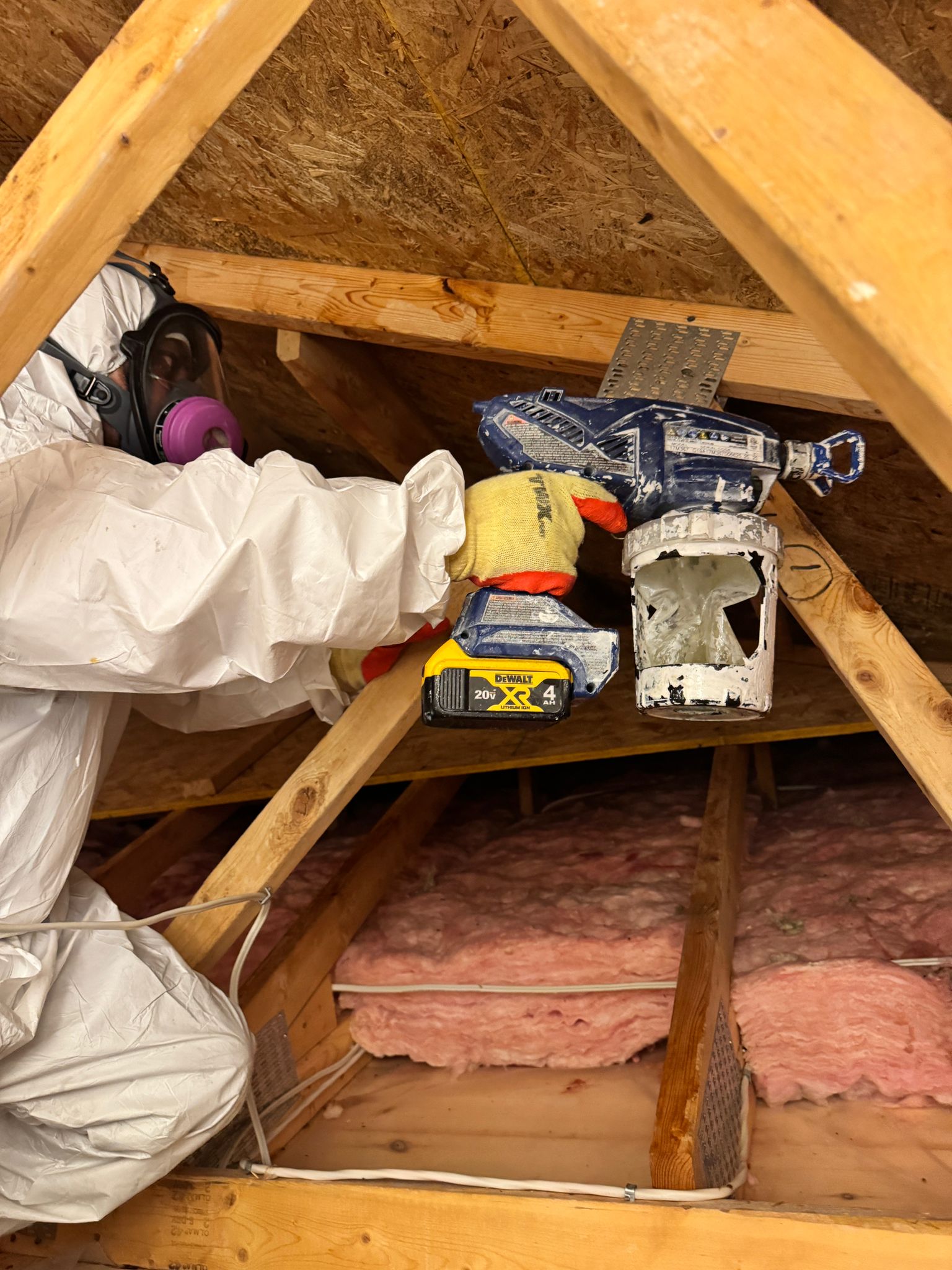
The short answer to “how fast does black mould grow on wet drywall” is 24 to 48 hours under typical GTA conditions. That is not marketing scare-talk, it is the actual biology of how mould colonies establish, and it is the reason every restoration professional pushes drying inside the 48-hour window. This guide covers what black mould is, why drywall is its perfect home, what it looks like at each stage, who is at health risk, and what to do if you find it.
The Short Answer: 24 to 48 Hours
Mould spores are present in all indoor air, all the time. They are not a contamination, they are a normal part of the environment, in concentrations of a few hundred to a few thousand spores per cubic metre even in clean homes. They become a problem only when they encounter the right conditions to germinate and form colonies.
On wet drywall in a typical GTA home, those conditions are met within 24 to 48 hours. Spores already present on the drywall paper germinate, grow hyphae (thread-like filaments), and start digesting the cellulose in the paper backing. By 48–72 hours, you can usually see visible growth. By a week, the colony is established and producing new spores that spread to other wet materials.
Black mould (the species most homeowners worry about, Stachybotrys chartarum) needs slightly longer than common moulds, usually 7–10 days for visible growth, but it follows the same timeline. The 24–48 hour window is when prevention is still possible. Past that, you are remediating.
What Black Mold (Stachybotrys chartarum) Actually Is
Stachybotrys chartarum is one of about a hundred mould species commonly found indoors. What makes it stand out:
- •Appearance: dark green to nearly black. Slimy when wet, powdery when dry.
- •Food preference: high-cellulose materials, drywall paper, ceiling tiles, wood, paper, fabric.
- •Moisture requirement: needs sustained high moisture (often persistent leaks rather than one-time floods).
- •Mycotoxins: produces compounds called trichothecenes that can cause respiratory irritation, headache, and immune effects in sensitive individuals when inhaled in significant concentration.
Important context: not every dark-coloured mould is Stachybotrys, and not every Stachybotrys colony is producing high mycotoxin levels. Lab testing of a sample is what confirms species and toxin production. That said, Health Canada is clear: indoor mould growth of any species is a health concern and should be removed promptly, regardless of whether the species is identified as toxigenic.
Why Drywall Is the Perfect Host
Drywall (gypsum board) is a sandwich: a gypsum core between two layers of paper. From a mould's perspective, this is ideal:
- •The paper is organic food. Mould feeds on cellulose. Drywall paper is essentially a buffet.
- •Gypsum holds moisture. The porous core absorbs and releases water slowly, keeping the paper damp for days after the original water source is gone.
- •It is everywhere. Every wall and ceiling in a typical GTA home is drywall. Mould has continuous surface to colonize.
- •Wall cavities are warm and dark. The back side of the drywall (inside the wall) is at room temperature, no light, no airflow, perfect growth conditions hidden from view.
This is why mould assessments after water damage almost always involve cutting drywall to inspect the cavity. The visible side often looks fine while the back is covered in colonies.
The Conditions Mould Needs to Grow
Four ingredients. Remove any one and growth stops:
- •Moisture: relative humidity above 60% on the surface, or visible water. The threshold for sustained mould growth is around 70% RH at the surface.
- •Organic material: cellulose, paper, wood, drywall backing, dust. Inorganic materials (concrete, glass, metal) do not host mould directly, mould on these surfaces is usually feeding on accumulated dust.
- •Temperature: most household moulds grow between 5–38°C. Optimal is 20–25°C, which is room temperature in every GTA home.
- •Time: 24 to 48 hours for common moulds; up to 7–10 days for visible Stachybotrys.
Moisture is the only one you can practically control. The temperature is whatever your home is. Organic material is built into the structure. Time runs on its own. So mould prevention is moisture control, full stop.
What It Looks Like at 24 Hours, 48 Hours, 1 Week, 1 Month
- •24 hours: Nothing visible yet. Spores have germinated; hyphae are microscopic. Smell test: faint earthy or musty note may appear.
- •48–72 hours: Faint discolouration on the drywall surface, greyish, greenish, or yellow-brown. Not obvious unless you look closely with good lighting.
- •1 week: Visible patches with defined edges. Colour deepens. Musty smell is unmistakable. Stachybotrys may start to appear as dark green or black slimy patches.
- •1 month: Established colony. Sporulating (releasing new spores). Spreads to nearby wet materials. Drywall paper begins to deteriorate. Health symptoms in sensitive occupants likely.
- •3+ months: Drywall structurally compromised. Mould has likely penetrated into wall cavity. Full remediation required, not just surface cleaning.
Note that this timeline assumes sustained moisture. If the source dries out and humidity drops below 60% RH, growth stops, though the mould remains present and viable, ready to grow again the next time conditions allow.
See Visible Mould on Drywall?
Do not start scrubbing, improper removal aerosolizes spores throughout the home. We provide IICRC S520 mould remediation with proper containment and HEPA filtration. 24/7 GTA dispatch. Call (416) 474-6364.
Health Risks: Who's Most at Risk
Most healthy adults exposed to small amounts of mould experience no symptoms or mild allergic reactions. But certain groups are at higher risk:
- •Immunocompromised: chemo patients, transplant recipients, HIV-positive individuals. Mould exposure can cause systemic infection in this group.
- •Asthma and allergy sufferers: mould spores trigger asthma attacks and worsen allergic rhinitis.
- •Infants and young children: developing respiratory systems are more vulnerable. Studies link early mould exposure to higher rates of childhood asthma.
- •Elderly: immune response weakens with age; respiratory infections from mould exposure become harder to clear.
- •People with chronic respiratory conditions: COPD, cystic fibrosis, bronchiectasis.
Common symptoms in healthy people: nasal congestion, sneezing, cough, sore throat, watery eyes, skin irritation. Symptoms typically improve within hours of leaving the affected environment and return on re-exposure, that pattern is the strongest signal that mould in your home is the cause. The US EPA mould guidelines offer additional context, though the general principles apply equally in Canadian homes.
Can You Remove Black Mould From Drywall Yourself?
For very small areas (under about 1 square metre or 10 square feet) of surface mould on non-porous material that you can clean with detergent, tile, glass, sealed concrete, DIY is acceptable with proper PPE (N95 mask, gloves, eye protection).
For drywall, the honest answer is usually no, for two reasons:
- You cannot just clean it. Mould has hyphae penetrating into the paper and gypsum. Surface cleaning kills what you can reach and leaves the rest to regrow. Stained drywall must be cut out to remove the colony entirely.
- Disturbing it spreads it. Cutting or scrubbing mouldy drywall releases massive amounts of spores into the air, which then settle on every other porous surface in the home. Without proper containment (plastic sheeting, negative-air HEPA machines), one small mould patch in the basement becomes contamination throughout the house within hours.
Professional mould remediation per the IICRC S520 standard uses physical containment, HEPA filtration to clean the air, controlled removal of contaminated drywall under negative pressure, antimicrobial treatment of remaining framing, and post-remediation verification testing. That is the protocol.
When to Test vs. When to Remediate
Mould testing, air sampling and surface sampling sent to a lab, tells you what species are present and at what concentrations. Useful in some situations, unnecessary in others.
- •Visible mould on drywall: No testing needed first. The mould is visible. Get a mould inspection and a remediation plan.
- •Musty smell with no visible source: Inspection first to find hidden growth. Testing may help confirm.
- •Health symptoms with no visible mould: Air sampling can establish baseline spore counts and identify problem species.
- •Real estate transaction or tenant dispute: Third-party lab testing for documentation.
- •After remediation: Post-remediation verification (PRV) testing confirms cleanup was successful.
Cost Ranges for Professional Removal in the GTA
- •Small contained area (under 10 sq ft): $500–1,500
- •Single room (10–100 sq ft): $1,500–6,000
- •Whole basement or multi-room: $6,000–25,000
- •HVAC system contamination: $2,000–6,000 added
- •Pre-1990 home with asbestos in vermiculite or drywall: add abatement costs
Insurance coverage for mould is variable in Ontario. Most policies cover mould only when it results from a covered water damage event (and was therefore preventable with prompt restoration). Mould from gradual leaks or maintenance issues is typically excluded. To prevent the situation from happening in the first place, fast water damage restoration is the only reliable answer.
Bottom Line
Black mould on wet drywall starts within 24 to 48 hours and becomes visible within a week. Drywall is its perfect host because the paper backing is organic food and the gypsum holds moisture. The only reliable prevention is fast professional drying after any water damage event, before the 48-hour window closes. If you are already past that window and you can see growth, do not touch it; cutting or scrubbing aerosolizes spores throughout the home. Get a professional crew in for proper containment, HEPA filtration, and S520-compliant professional mould remediation.