
Water Damage Is Rarely Permanent. Here Is What Actually Cannot Be Saved.
Signs water damage is permanent vs. fixable, drywall, hardwood, subfloor, framing. GTA water damage experts on what is worth saving.
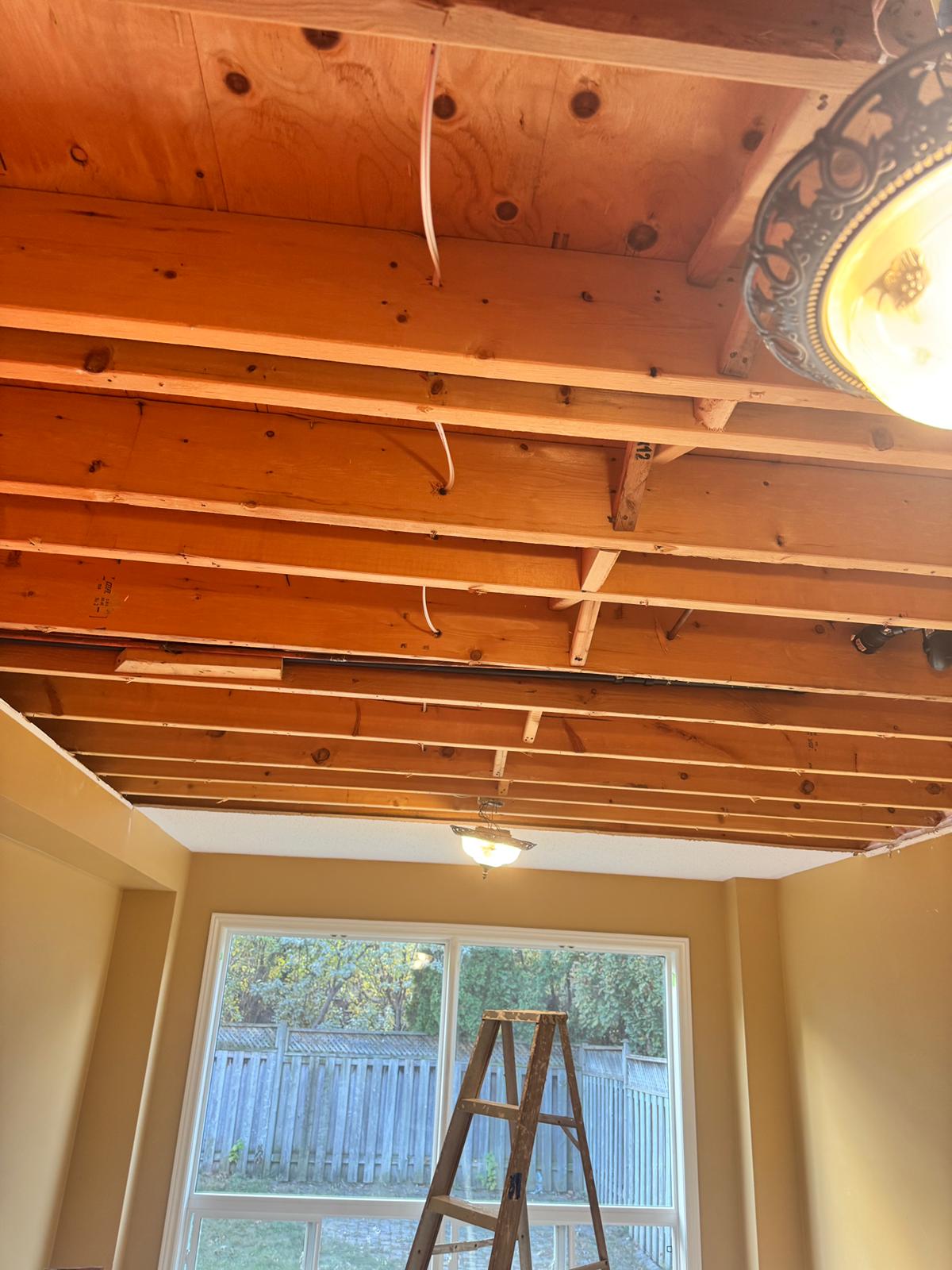
“Is this damage permanent?” is the first question most homeowners ask when they look at a wet ceiling, swollen baseboards, or a buckled hardwood floor. The honest answer is: it depends on what is wet, how long it has been wet, and how fast you dry it. This guide walks through every common building material in a GTA home, what is fixable, what is not, and the visible signs that tell you which side of the line you are on.
The Honest Answer: Most Water Damage Isn't Permanent If Caught Fast
Drywall, hardwood, subfloor, even framing, almost everything in a GTA home can be dried back to a serviceable state if the moisture is removed within 24 to 48 hours. The materials that fail are the ones that stayed wet long enough to lose structural integrity, host mould colonies, or warp past the point where they can return to their original shape.
The decision, dry or replace, is not always obvious from the surface. A drywall panel that looks fine can have wet insulation behind it and active mould growth in the cavity. A hardwood floor that looks ruined may flatten back over a few weeks with proper drying. The only way to know is to measure: moisture meters on every affected material, thermal imaging on every wall and ceiling. Eyeballing it loses you money either way.
Drywall: When to Dry It Out vs. Cut It Out
Drywall is gypsum sandwiched between paper. The paper is the first thing mould eats. Whether your drywall is salvageable comes down to three things: how long it was wet, how high the water rose, and what kind of water it was.
- •Salvageable: drywall wet less than 24 hours by clean water, no visible swelling, no soft spots, no staining beyond surface. Dries with proper airflow and dehumidification in 3–5 days.
- •Borderline: wet 24–48 hours, some softening or staining, but structurally intact. May dry, but should be assessed for mould before patching and painting. Often the bottom 2 feet are cut (a “flood cut”) and the upper portion is dried.
- •Replace: drywall that has crumbled, swollen, lost paint adhesion, or shows visible mould. Drywall that was hit by Category 2 (grey) or Category 3 (sewage) water always gets cut, regardless of how it looks.
Hardwood Floors: Cupping, Crowning, Buckling, What Each Means
Hardwood is wood, and wood moves with moisture. The shape of how it deforms tells you whether it can be saved.
- •Cupping: edges of each board curl up, centre stays low. Caused by moisture absorbed from below (subfloor wet, top dry). Often reversible with proper drying over 3–6 weeks. Once dry, sanding can flatten any remaining variance.
- •Crowning: centre of each board rises higher than the edges. Caused by drying too fast or sanding cupped boards before they were dry. Usually permanent. Replace.
- •Buckling: boards lift completely off the subfloor. Caused by prolonged saturation and trapped moisture pushing boards up. Almost always permanent. Replace.
- •Surface staining: dark blotches in the finish only. Often fixable by sanding and refinishing. Black stains that have penetrated through the finish into the wood (tannin reaction with metal) usually mean replacement of affected boards.
For a cupped floor, do not rush. Aggressive drying with too much heat is what causes cupping to become permanent crowning. Slow, controlled drying with monitored relative humidity gives the best chance of recovery.
Subfloor and Framing: Hidden Damage That Decides Everything
Subfloor is plywood or OSB, engineered wood that swells, delaminates, and loses structural strength when saturated. Framing is dimensional lumber: 2x4s and 2x6s in the walls, joists under the floor.
Subfloor that has swelled, sagged, or shows delamination (layers separating) needs replacement. Subfloor that is wet but structurally intact can usually be dried in place. The risk: hardwood or tile installed over wet subfloor will fail again in months as the trapped moisture works its way out.
Framing is more forgiving. Dimensional lumber tolerates being wet for short periods and recovers as long as it is dried within a week or so. The problem is what grows on it: mould colonies on framing inside wall cavities are common after water damage and require remediation, not just drying. This is why a professional mould inspection is worth doing 4–6 weeks after major water damage, even if everything looks fine.
Insulation: Almost Always Replace
Wet insulation does not dry well in a wall cavity. Fibreglass batt loses R-value when saturated and traps moisture against the framing for weeks. Cellulose insulation packs down and loses loft permanently. Spray foam is the only common insulation that handles getting wet without losing performance, everything else gets cut out and replaced.
This is one of the cheapest line items in a restoration job and one of the most overlooked. Skipping it is how you end up with mould inside the wall a few months after a flood you thought was handled.
Worried About Hidden Damage?
Thermal imaging and moisture meter assessment across the GTA. Free on-site, no obligation. We will show you exactly where moisture is hiding and what it means. Call (416) 474-6364.
Personal Belongings: Paper, Electronics, Upholstery
- •Paper documents and books: salvageable if frozen quickly (slows degradation while you decide). Document recovery services in Toronto can freeze-dry pages. DIY drying glues pages together permanently.
- •Photos: rinse in clean water, lay face-up to air dry, do not stack. Sometimes recoverable.
- •Hard drives and electronics: do not power on. Seal in plastic bags and bring to data recovery quickly. After 24 hours of corrosion, recovery success drops sharply.
- •Upholstered furniture: sofas, mattresses, fabric chairs that absorbed Category 1 water and were dried within 24 hours can usually be saved. Anything that hit grey or sewage water gets discarded. The cost of professional cleaning often exceeds replacement.
- •Wood furniture: solid wood usually survives drying. Particle board and MDF (most flat-pack furniture) swells and falls apart.
Visible Signs Damage Has Become Permanent
If you see any of these weeks after the water event, you are past the point of drying:
- •Persistent musty odour: mould is established somewhere you cannot see.
- •Visible mould colonies: black, green, or white spots on drywall, framing, or trim. Past drying, into remediation.
- •Structural sag: soft spots in the floor, sagging ceiling, doors that no longer close square. Subfloor or framing has lost integrity.
- •Recurring stains after painting: moisture is still active behind the surface. Painting over does nothing.
- •Wood that crowned or buckled: permanent shape change. Replace.
Why Thermal Imaging and Moisture Meters Matter
Surface dryness lies. A wall that feels dry to the touch can have wet insulation behind it. A floor that looks normal can have a saturated subfloor. The only reliable way to know whether a material is dry is to measure it.
Pinless moisture meters scan up to 3/4 inch into wood and drywall non-destructively. Pin meters drive small probes in for spot readings. Thermal imaging cameras show temperature variation across walls and ceilings, wet materials are colder due to evaporative cooling, so moisture shows up as dark patches in the image. Together, these tools find the moisture you cannot see.
IICRC S500 sets specific moisture content targets for each material type (typically 12–15% for wood, dry-standard equivalents for drywall). A professional restoration crew dries to the target and documents the readings. That is what tells the insurance company the job is done, and what tells you the damage is reversible, not permanent.
For a complete look at the restoration process and the equipment involved, see our water damage restoration page.
Bottom Line
Most water damage in a GTA home is reversible if it is caught fast and dried with professional equipment. The damage that becomes permanent is the damage you do not see, wet insulation, hidden moisture in wall cavities, mould colonies inside framing, usually because someone tried to dry surfaces without measuring what was happening underneath. If you are weeks past the water event and something still feels wrong, do not paint over it, measure it.