
The Equipment That Dries Water Damage Fast, and Why Fans Are Not Enough
What actually dries water damage fast, air movers, LGR dehumidifiers, the math behind drying time, and why box fans alone will not cut it.
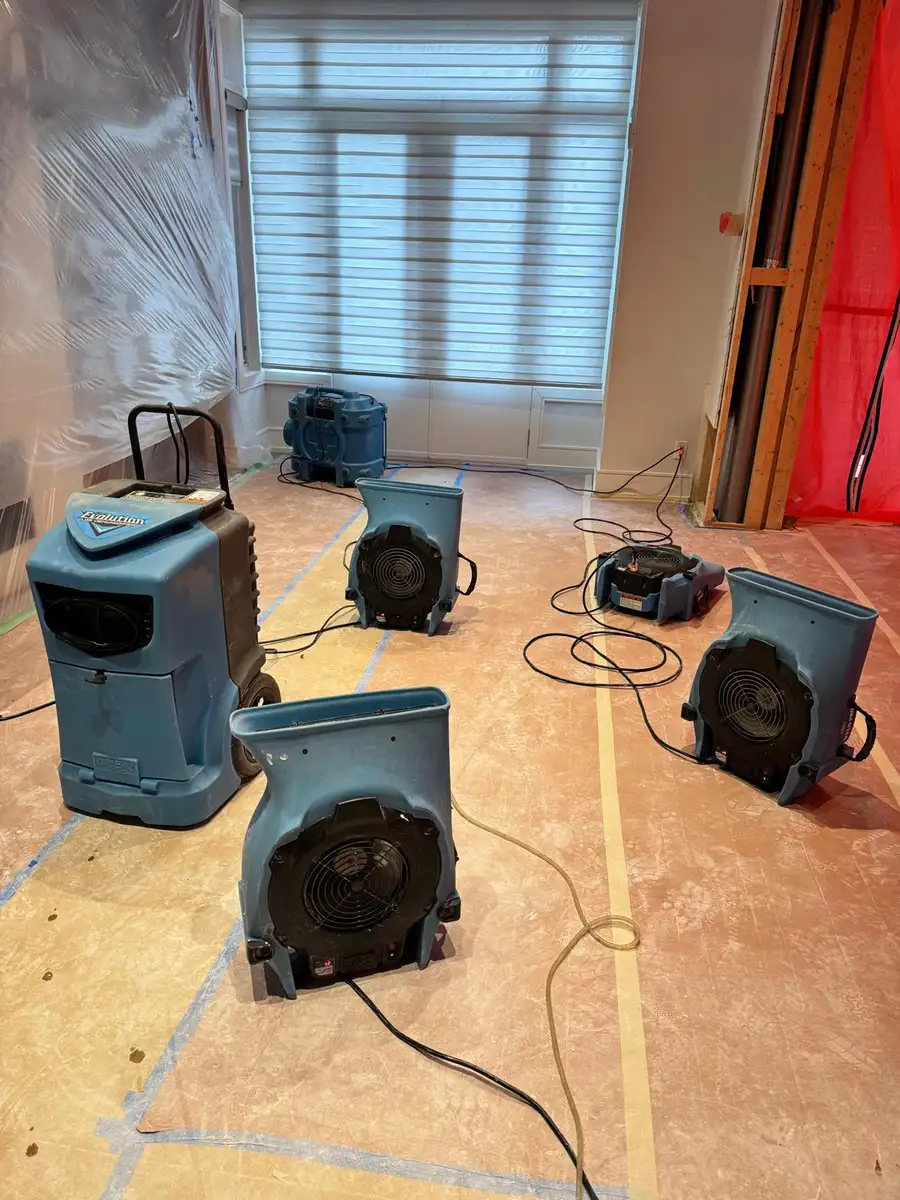
Speed is the only variable that matters when drying water damage. Catch it inside the 24-hour window and you are mostly cleaning up. Miss the window and you are remediating mould. This guide covers the tools and methods that actually move water out of building materials fast, and why most of what homeowners try (box fans, open windows, residential dehumidifiers) is not enough for anything beyond a small spill.
The 48-Hour Rule: Why Speed Beats Everything
Mould spores are present in all indoor air at all times. They need three things to grow into colonies: moisture, an organic food source (drywall paper, wood, dust, insulation), and time. Once water has been sitting on or in a building material for 24 to 48 hours, colonies start to establish. Once they do, drying alone will not fix the problem, you need remediation: containment, HEPA filtration, biocide, sometimes demolition.
That is why every restoration crew chases the drying timeline aggressively. The math is simple: a $4,000 drying job on day 1 becomes a $15,000 mould remediation job on day 4. Every hour shaved off drying time is value preserved, and dollars not spent on the rebuild.
Air Movers vs. Box Fans (the Difference Is Huge)
Both move air. That is where the similarity ends.
A residential box fan moves 1,000–2,000 CFM of air at low velocity, distributed across a wide area. It feels strong on your face. It does not push enough air at any single surface to evaporate moisture out of drywall, subfloor, or carpet padding fast enough to matter.
A commercial axial air mover moves 2,500–3,500 CFM in a focused, high-velocity jet aimed at the wet surface. The high-velocity airflow strips the saturated boundary layer of air sitting against the surface, exposing wet material to dry air, accelerating evaporation 3–5x faster than a box fan.
Per the IICRC S500 standard, professional drying calls for one air mover per 10–16 linear feet of wet wall, plus additional units for floors and ceilings. A typical Toronto basement flood needs 6–10 air movers running 24/7. You cannot cobble that together with box fans.
Refrigerant vs. LGR Dehumidifiers (and Which You Need for GTA Basements)
Air movers evaporate water out of materials into the air. Dehumidifiers remove that water from the air before it can re-condense onto cooler surfaces. Without enough dehumidification, air movers just move humidity around the room.
- •Residential dehumidifier (50–70 pint): pulls 3–5 gallons of water per day in average conditions. Stops working efficiently below ~50% RH. Useful for ongoing moisture control. Inadequate for active water damage.
- •Commercial refrigerant dehumidifier: 12–20 gallons/day. Better, but loses efficiency in cold spaces (below 18°C) and below 40% RH. Used for moderate damage in temperate conditions.
- •LGR (Low-Grain Refrigerant) dehumidifier: 25+ gallons/day, works down to 30% RH and at lower temperatures. The standard for serious water damage in GTA basements where temperature and humidity both work against you.
- •Desiccant dehumidifier: specialty equipment for very low temperatures and very low target humidity (industrial drying, below 30% RH). Rarely needed in residential.
For a GTA basement flood, high humidity, cooler temperature, lots of porous material, an LGR is the right tool. A residential 50-pint unit will run 24/7 for a week and still leave the air at 65% RH, which is plenty of moisture for mould.
Why Opening Windows Can Make Drying Slower (Humidity Math)
The instinct after water damage is to throw the windows open. In the GTA, that often makes things worse. Here is the math.
Drying speed depends on the difference between the moisture content of the air and the moisture content of the wet material. Lower indoor humidity = faster drying. The thing is, summer outdoor humidity in Toronto regularly hits 70–80% RH. If your AC is keeping indoor RH at 50–55%, opening windows raises indoor humidity, slowing evaporation from your wet drywall.
Practical rule:
- •Summer (May–September): close windows, run AC, run dehumidifier. Outdoor humidity is higher than what your equipment can achieve indoors.
- •Winter (December–March): brief window opening to vent very humid indoor air is fine if outdoor RH is much lower. Then close and let heating system continue.
- •Shoulder seasons: check outdoor humidity. If outdoor RH is lower than indoor, opening windows helps. If higher, close them.
Heat: When It Helps, When It Hurts
Warm air holds more moisture, so heating a wet space accelerates evaporation. Professional crews use controlled heat (heated air movers, low-grade space heat) to push drying when conditions allow.
The problem is that wood reacts to rapid drying by cracking, cupping, or crowning. Pushing heat into a space with a wet hardwood floor will save you 24 hours of drying time and cost you a $10,000 floor replacement. IICRC S500 specifies temperature limits for different materials and drying conditions for exactly this reason.
DIY rule: do not use space heaters to dry water damage on hardwood, engineered flooring, or anywhere near antique wood. If you must use heat, keep ambient temperature under 27°C and combine with dehumidification, warm air without dehumidification just creates a sauna.
Drying Not Working? Equipment Matters.
If your DIY setup is not pulling humidity below 50% after 24 hours, you do not have enough dehumidification. We bring LGR dehumidifiers and commercial air movers across the GTA. Call (416) 474-6364.
Drying Timeline by Material
How long different materials take to fully dry under proper conditions (commercial equipment, monitored RH below 40%):
- •Drywall: 3–5 days for surface, longer for cavity moisture. The bottom 2 ft often gets cut to expose framing for direct drying.
- •Hardwood: 7–21 days depending on saturation. Forced fast drying = cracked wood.
- •Concrete: weeks to months for fully saturated slabs. Surface dries fast; deep moisture migrates out slowly. Not always practical to dry to standard, sometimes sealed and monitored.
- •Carpet: 24–48 hours with proper extraction and air movers. Padding usually replaced if Category 2 or 3 water.
- •Insulation (fibreglass batt, cellulose): rarely dries successfully in place. Standard practice: remove and replace.
- •Subfloor (plywood, OSB): 5–10 days. Swelled or delaminated subfloor must be replaced.
How Pros Measure When Something's Actually Dry (Moisture Meters, Not Guessing)
Surface dryness lies. A wall that feels dry to the touch can have 20% moisture content in the framing behind it. Professionals measure to a specific target before declaring the structure dry.
- •Pin moisture meter: drives small probes into wood for direct moisture content reading. Target for framing: 12–15%.
- •Pinless moisture meter: non-destructive scan up to 3/4" deep. Used for drywall and finished surfaces.
- •Thermal imaging camera: shows wet areas as cooler patches due to evaporative cooling. Used to find moisture in cavities and behind walls.
- •Hygrometer: measures ambient RH and grain depression (difference between inside and outside humidity). Used to track drying progress and equipment effectiveness.
A daily moisture log, readings on the same materials at the same locations every 24 hours, is what tells the insurance company the structure is dry and the equipment can come out.
When DIY Drying Fails and What Happens Next
You know your DIY drying has failed if any of these are true 48–72 hours in:
- •Indoor humidity has not dropped below 55%.
- •Drywall still feels cool or damp to the touch.
- •Any musty smell has appeared.
- •You can see staining spreading or deepening on walls or ceilings.
- •Hardwood has visibly cupped, crowned, or buckled.
Past 48 hours with active moisture in building materials, the conversation shifts from drying to mould remediation. That is a different protocol, containment, HEPA filtration, biocide, sometimes demolition. The cost goes up significantly. If you are at this point, get a professional in for an assessment before you make it worse. For a complete rundown of restoration, see our water damage restoration page.
Bottom Line
Drying water damage fast is not about working hard with the wrong tools. It is about moving enough air at high enough velocity to evaporate moisture, while pulling that moisture out of the air with enough dehumidification capacity to keep humidity below 40% RH. That requires commercial equipment for anything beyond a small spill. Measure progress with moisture meters, not your fingertips, and call a pro at hour 24 if numbers are not moving.