
Flood Restoration in Toronto
Toronto's combined sewer system, aging infrastructure, and increasing storm intensity make basement flooding a reality for thousands of Toronto homeowners every year. When it happens, fast response is everything.
Toronto's Flooding Problem
Toronto has a well-documented flooding problem, and it is getting worse. The combined sewer system that serves large portions of the city's older neighbourhoods was engineered over a century ago for a fraction of today's population and impervious surface area. When those pipes reach capacity during a heavy rain event, there is nowhere for the water to go except backward, up through basement floor drains and into finished lower levels.
The City of Toronto acknowledges this reality. The municipality operates an ongoing Basement Flooding Protection Subsidy Program and has invested hundreds of millions of dollars in sewer separation infrastructure across the city. But much of the combined system remains, particularly in established neighbourhoods where full separation would require tearing up entire streetscapes.
Toronto's geography compounds the problem. The Don River and Humber River valleys create natural drainage corridors that concentrate storm runoff. Neighbourhoods in the lower valleys, parts of Riverdale, East York, Etobicoke, and the lower portions of several ravine-adjacent communities, face overland flooding risk that goes beyond sewer capacity alone.
Recent severe storm events have made this vivid. The July 2013 storm, the August 2018 event, and increasingly frequent high-intensity summer storms have each produced widespread basement flooding across the city. These are not once-in-a-generation anomalies anymore.
Learn more about our Toronto restoration services or our basement flooding cleanup service.
Types of Flooding We Restore in Toronto
Not all flooding is the same, and each type requires a different response protocol. Here is what we handle and why each requires a specific approach:
- Combined sewer backup: The most dangerous category of flooding. Water from a combined sewer backup is classified as Category 3, grossly contaminated water containing sewage, bacteria, and pathogens. It cannot be treated as ordinary floodwater. All contents in contact with the water must be assessed for salvageability, porous materials cannot be dried in place and must be removed, and all structural surfaces require antimicrobial treatment. Common in Toronto's older neighbourhoods during heavy rain events. See our detailed section on Category 3 protocols below.
- Sump pump failure flooding: When the water table rises faster than a disabled or overwhelmed sump pump can handle, water enters through the weeping tile system and accumulates on the basement floor. This is typically Category 1 (clean groundwater) initially, but can deteriorate if it contacts sewage fixtures or sits for an extended period.
- Foundation seepage: Groundwater under hydrostatic pressure forces its way through cracks and cold joints in poured concrete walls, or through the mortar joints of concrete block foundations. This is often a slow, ongoing process that saturates basement wall assemblies over time rather than producing a sudden flood.
- Overland flooding: Storm runoff exceeds the capacity of surface drainage and enters through ground-level windows, doors, and window wells. More common in lower-lying Toronto properties and those adjacent to ravines or natural drainage courses during extreme rainfall events.
- Water heater and appliance failure: Sudden discharge from a failed water heater, washing machine, or dishwasher floods utility rooms and adjacent spaces. Typically Category 1 initially. Time is critical, the longer clean water sits, the faster it degrades in category and the greater the structural damage. Reference our water damage restoration service for full details on these scenarios.
Category 3 (Sewage) Flood Restoration in Toronto
Combined sewer backup flooding deserves its own section because it is fundamentally different from other types of flooding, and because many restoration companies in the GTA are not properly equipped to handle it.
Category 3 water is classified as grossly contaminated. It contains human waste, bacteria including E. coli and Salmonella, potential viral contaminants, and chemical compounds from the combined sewer stream. Coming into contact with it without proper protective equipment poses genuine health risks. Attempting to clean it up with household cleaning products and a mop is not an adequate response.
Our Category 3 flood restoration protocol follows IICRC S500 requirements:
- All technicians wear full PPE: Tyvek suits, gloves, N95 or full-face respirators, and boot covers throughout the entire process.
- All porous materials in contact with Category 3 water, carpet, drywall, insulation, baseboards, wood subfloor, must be removed and disposed of. They cannot be dried in place and considered safe.
- All non-porous structural surfaces (concrete, masonry, steel) must be thoroughly cleaned and treated with EPA-registered antimicrobial solutions.
- Disposed materials are double-bagged and handled according to applicable Ontario regulations for contaminated waste.
- Post-remediation verification testing confirms that contamination has been reduced to acceptable levels.
If you are dealing with sewage backup flooding and are experiencing odour issues in your Toronto property after restoration, visit our odour removal page for information on post-sewage odour treatment.
Flood Restoration and Mold Prevention in Toronto
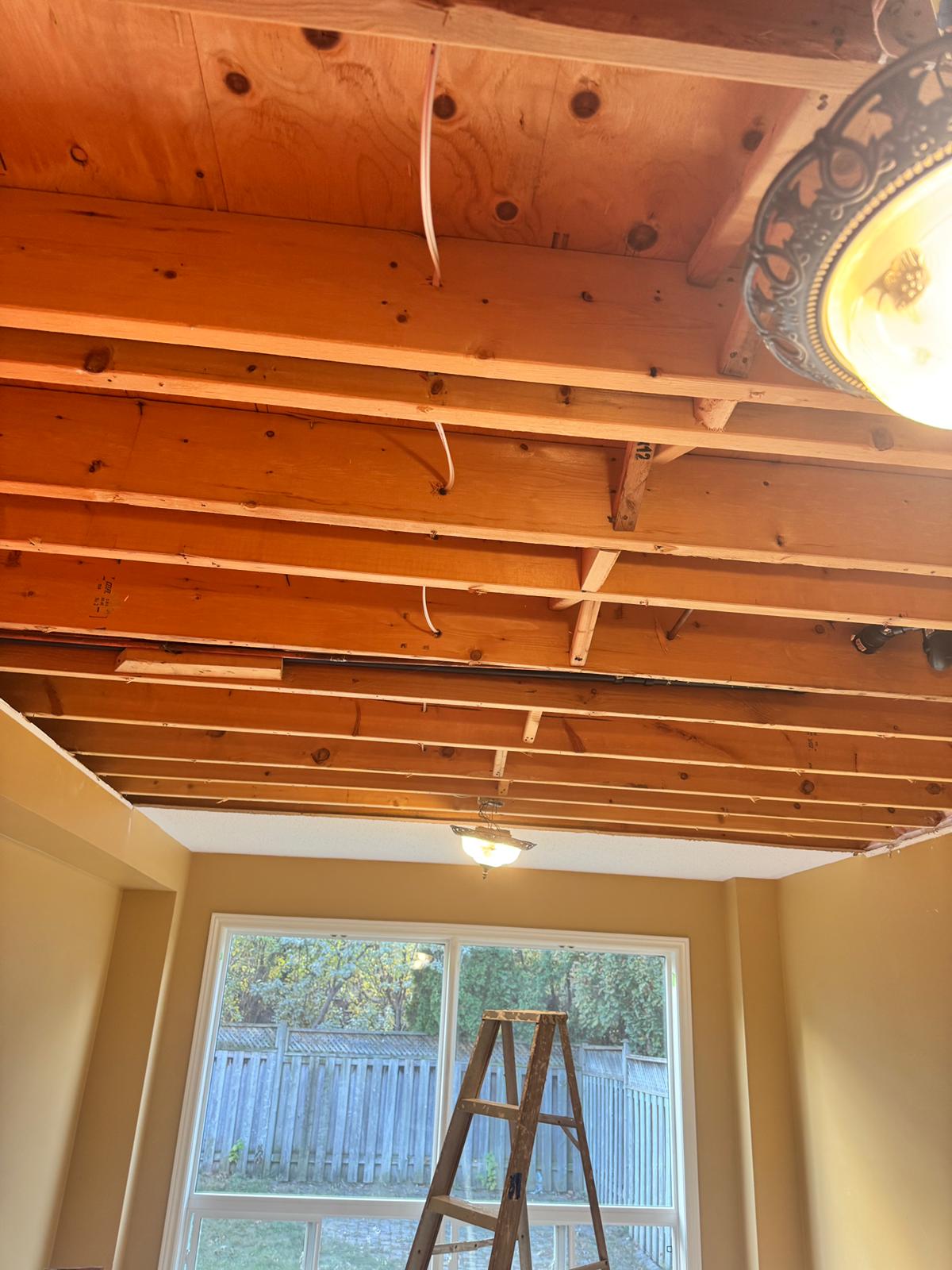
The 24 to 48-hour window after flooding is critical. Mold does not immediately appear following a flood event, it takes time for spores already present in the environment to germinate and establish visible colonies. But that establishment process begins almost immediately when wet materials remain wet.
This is why the speed of our response matters beyond just removing standing water. Getting industrial drying equipment into your Toronto basement within hours of a flooding event dramatically reduces the likelihood of mold development, our structural drying process uses high-velocity air movers and commercial dehumidifiers to bring materials back to safe moisture levels. Structural materials that are brought back to dry conditions within 48–72 hours rarely develop significant mold. Materials that stay wet for a week almost always do.
Drying is not always the right choice. For Category 3 sewage-contaminated materials, drying in place is not an option, those materials must be removed regardless of drying speed. For Category 1 and 2 scenarios, our team makes a material-specific assessment: is this material cleanable and dryable, or does the damage level warrant removal and replacement? Hardwood flooring, for example, may be salvageable with rapid drying in some circumstances. Heavily saturated drywall typically is not.
We monitor moisture levels daily throughout the drying period, providing readings until structural materials return to baseline. This ongoing monitoring also serves as documentation for insurance claims. If mold does develop despite our best efforts, we handle the complete transition to mold remediation, visit our mold removal Toronto page for details.
Why Choose Us
Sewage Backup Specialists
Fully equipped for Category 3 sewage backup flooding, the most common and most hazardous type of basement flooding in older Toronto neighbourhoods.
24/7 Response
Genuine 24/7 emergency response for flood events across Toronto. The faster we respond, the less damage and the lower the total restoration cost.
Insurance Claims
We document flooding thoroughly and work directly with Toronto home insurance adjusters on sewer backup, sudden water damage, and overland flooding claims.
Mold Prevention
Rapid industrial drying within the critical 24–48 hour window dramatically reduces post-flood mold risk in your Toronto property.
Full Restoration
From emergency extraction and drying through rebuilding, drywall, flooring, painting, one team completes the entire restoration.
Toronto-Wide Service
We cover all Toronto neighbourhoods including the downtown core, Midtown, East End, West End, North York, Etobicoke, and Scarborough.
Frequently Asked Questions
Flooding in Toronto? Call Now, We Respond 24/7.
Call (416) 474-6364 immediately. The faster we respond, the less damage to your Toronto home.